
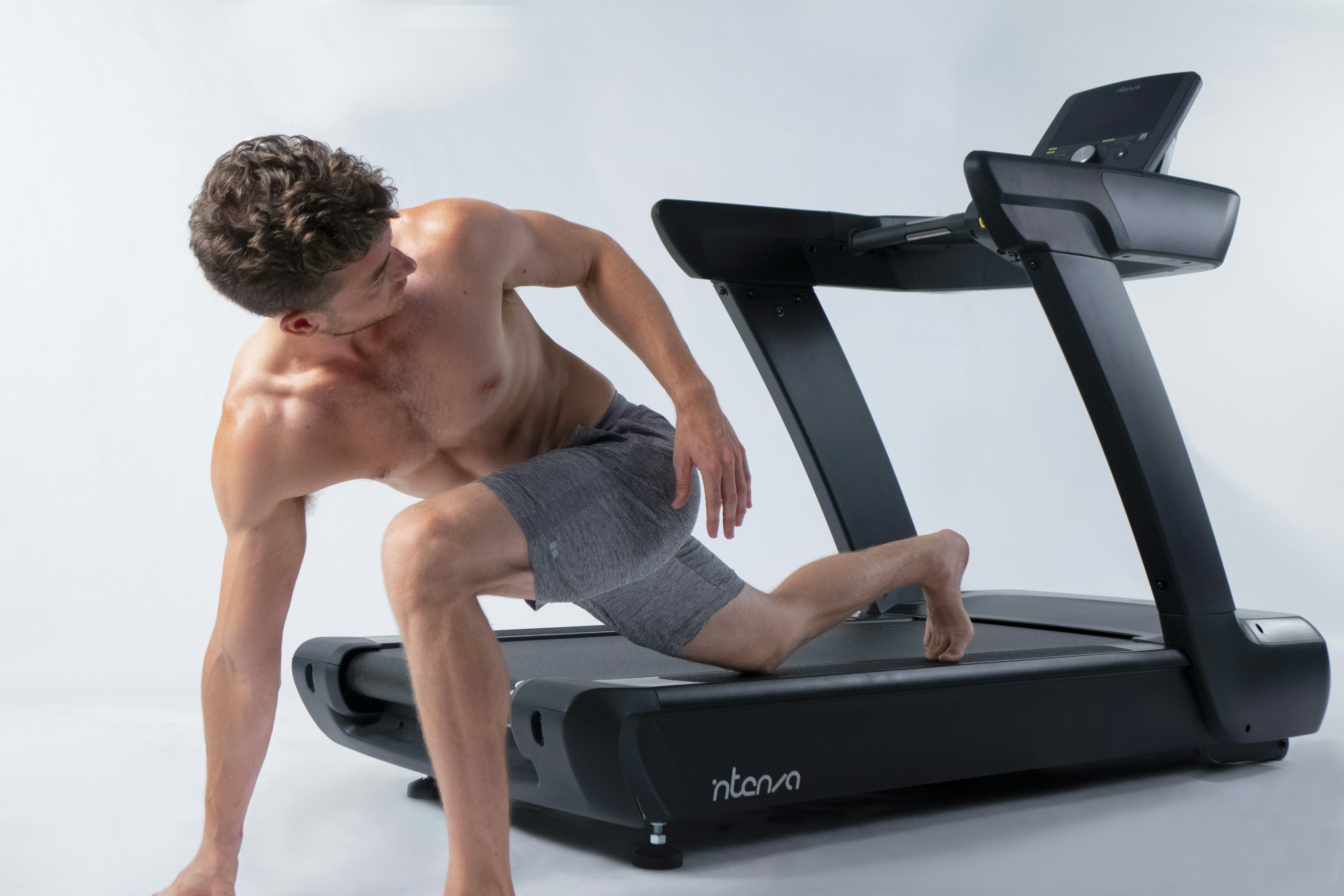
PowerMax TDM-98 Treadmill
The PowerMax TDM-98 is positioned as a practical home treadmill for users who want to walk, jog, or complete regular cardio sessions without visiting a gym. Its intended audience includes beginners, casual exercisers, and households seeking a convenient machine for consistent indoor activity. Rather than being designed primarily for high-level athletic training, its appeal lies in combining everyday usability with a manageable home-gym format. The overall assessment should therefore consider how well it supports routine exercise, not just its maximum performance.
Construction and layout are especially important in a domestic setting. A stable frame can reduce unwanted movement during walking or jogging, while appropriately sized belt dimensions provide enough room for a natural stride. The treadmill’s appearance, handrail design, motor housing, and control arrangement also influence whether it feels suitable for a shared room. If the TDM-98 includes a folding mechanism, the hinge, locking action, and folded footprint should be checked carefully against the manufacturer’s specifications. These details determine whether it can fit comfortably in a small bedroom, apartment, or multipurpose room and whether one person can reposition it for storage. Transport wheels and overall weight are similarly relevant, since a compact footprint does not necessarily mean easy portability.
Expected durability depends on the strength of the frame, the running deck, motor enclosure, handrails, and cushioning system. These components should appear sufficiently robust for the stated user and weight limits, although long-term reliability cannot be confirmed from appearance alone. Manufacturer information should be used to verify motor ratings, deck capacity, belt size, folding dimensions, warranty coverage, and recommended maintenance. This review will evaluate the TDM-98 through practical criteria: walking and jogging comfort, stability, motor performance, speed control, operating noise, everyday convenience, safety features, cleaning and lubrication requirements, and overall value. Considering these factors together provides a more useful buying perspective than focusing on specifications in isolation.
The PowerMax TDM-98 is best assessed as a home treadmill designed to support routine walking, jogging, and moderate running rather than automatically being treated as a commercial training machine. At walking and jogging speeds, the motor should deliver a smooth belt response with little hesitation when the user changes pace. Faster running places greater demand on motor capacity, acceleration, and cooling, so performance depends on the user’s weight, stride, session length, and the selected speed. A steady pace without surging or excessive vibration is a more meaningful measure than the headline maximum speed alone.
The running deck should provide sufficient length for a natural stride, particularly when taller users move from jogging to running. A narrower or shorter surface can feel restrictive because it leaves less room to correct foot placement, even when the treadmill’s speed range appears adequate. Users should therefore compare the deck dimensions with their own stride and preferred workout style. Its cushioning can also make indoor exercise more comfortable than pavement by reducing some impact transferred to the knees and ankles, although it cannot eliminate joint stress or replace appropriate footwear.
If equipped with incline adjustment, the feature increases workout intensity without requiring a major increase in speed. Powered incline is more convenient for interval training because settings can be changed while moving, whereas manual adjustment requires stopping and selecting a new position. The practical value depends on how quickly and consistently the mechanism responds. Incline use also increases motor load, so sustained uphill sessions may expose limitations sooner than level running.
Noise is generally least noticeable during walking and rises as belt speed and motor effort increase. Stability should remain acceptable at faster paces, with minimal frame movement or belt vibration, provided the floor is level and the user stays within the recommended weight limit. The TDM-98 is therefore likely to suit light to regular home exercise, while users planning daily long-distance running should verify continuous operating guidance, motor capacity, deck dimensions, and warranty coverage before purchase.
The PowerMax TDM-98 uses a straightforward console intended to keep essential workout information visible without overwhelming first-time users. During exercise, the display typically presents speed, elapsed time, distance, calories, pulse, incline, and the selected workout mode. These readouts make it possible to track progress at a glance, although the screen is more functional than premium. Larger figures, particularly speed and time, are generally easier to read while walking, whereas smaller fields may require a brief look away from the belt. Incline and pulse information can be useful, but their accuracy depends on the machine’s configuration and the user maintaining proper contact with the sensors.
Everyday controls are designed around simple operation. Start and stop functions should be accessible from the console, while speed and, where fitted, incline controls allow gradual adjustments during a session. Preset programs can add variety by changing intensity automatically, although the selection and level of customization may be basic compared with higher-priced treadmills. Users should begin at a low speed, confirm that the belt is moving smoothly, and learn the control layout before attempting faster workouts. A phone or tablet holder is useful if included, but Bluetooth, speakers, USB charging, and app compatibility should be verified for the exact TDM-98 variant rather than assumed from similar models.
Safety depends on using the emergency stop key correctly. Attach it to clothing before starting so that pulling away from the machine stops the belt quickly. Firm handrails provide support during mounting and dismounting, while a non-slip running surface helps maintain footing; neither replaces attentive use. Leave clear space around the treadmill, keep children and pets away, and avoid placing it on an uneven or damp surface. Automatic shutdown may occur after inactivity or when the safety key is removed, but users should still stop the belt manually after every workout.
Assembly usually involves attaching the uprights, console, and handrails, followed by checking every fastener. Routine care includes wiping sweat from the frame, inspecting belt alignment, and applying manufacturer-approved lubricant at the recommended intervals. Fold and store the unit only when the model supports it, keeping the area dry. With basic setup and a short familiarization period, the TDM-98 should present a manageable learning curve for new treadmill owners.
The PowerMax TDM-98 appears best suited to buyers seeking a practical home cardio machine rather than a dedicated performance treadmill. Its likely strengths are a home-friendly footprint, straightforward workout controls, cushioning intended to make walking and light jogging more comfortable, and portability that can help households with limited space. These qualities may also make it useful for beginners, casual exercisers, and weight-loss users who value regular movement more than advanced training data. Convenience features included with the unit can further improve everyday usability, provided they match the buyer’s expectations.
Its limitations should be considered carefully. The running surface may feel restrictive for taller users, longer strides, or faster sessions, while a basic display may provide only essential information rather than detailed training feedback. Noise, manual adjustments, and the effort required for assembly can reduce convenience. Performance may also be insufficient for sustained, intensive running, particularly for larger athletes. Prospective buyers should additionally confirm warranty terms, replacement-part availability, and local after-sales support instead of assuming that service will be readily accessible.
In value terms, the TDM-98 can be competitive among similarly priced entry-level treadmills when the priority is walking, occasional jogging, compact storage, and simple controls. However, a marginally more expensive alternative may offer a wider belt, stronger motor, quieter operation, better cushioning, more precise incline adjustment, or a clearer warranty. Before purchasing, verify the motor rating, maximum user weight, belt dimensions, top speed, incline type, cushioning system, folded or stored dimensions, machine weight, display metrics, noise expectations, assembly requirements, return policy, and service coverage.
The recommendation is therefore use-specific. It is a reasonable choice for beginners, casual walkers, weight-loss routines, and households needing an accessible treadmill for moderate exercise. It may also suit occasional joggers who fit comfortably within the available running area. Buyers planning frequent high-speed running, demanding interval training, or long sessions should choose a more powerful model with a larger deck and stronger support. Overall, purchase the TDM-98 for convenience and moderate home use, not as a substitute for a serious training treadmill.


Leave a Reply