
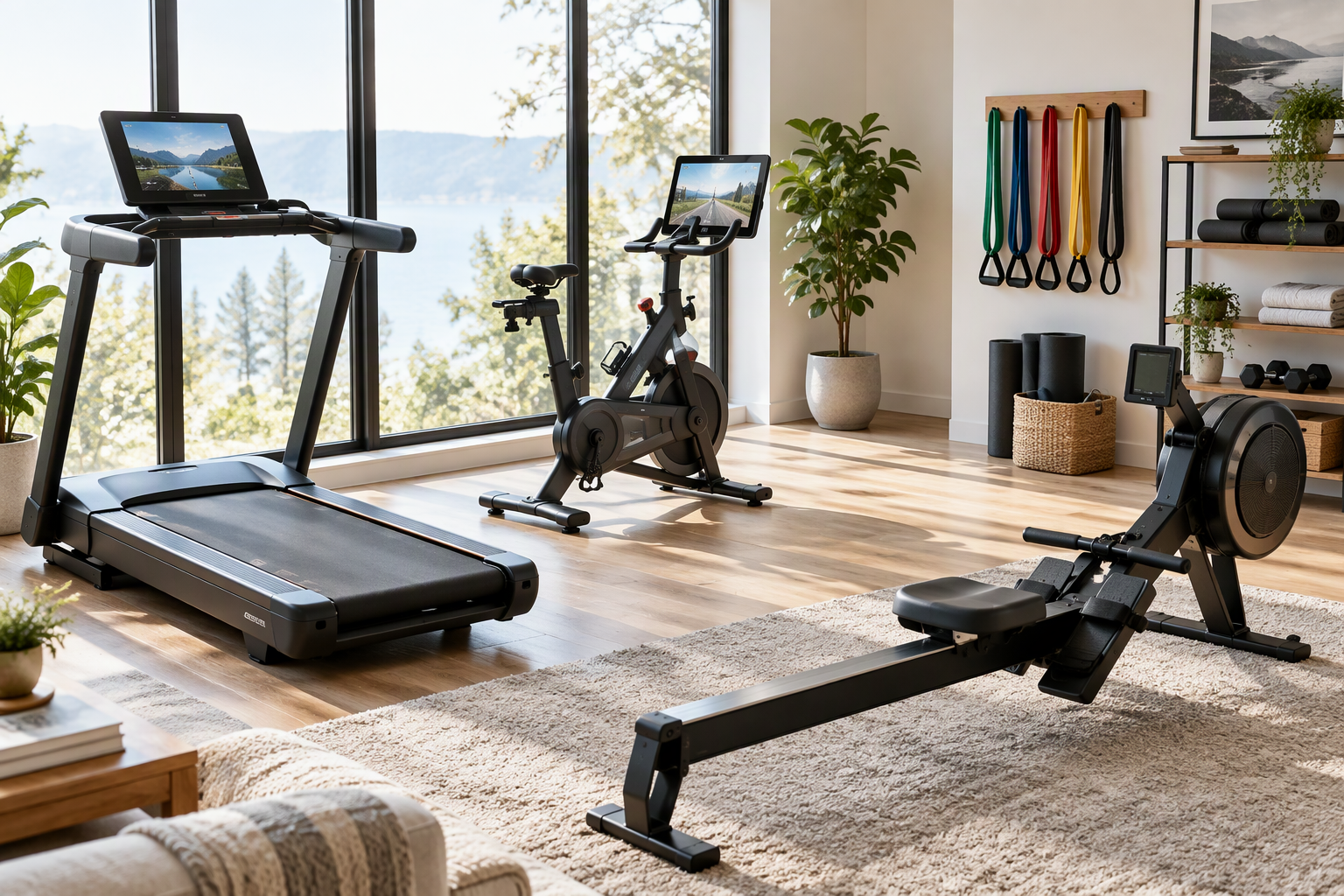
NordicTrack is widely associated with connected treadmills, bikes, rowers, and interactive workouts, but it is not the only route to a useful home gym. The best alternative to NordicTrack depends on your space, budget, training goals, maintenance preferences, and whether you actually want a subscription-based workout experience.
Quick answer: what are the best NordicTrack alternatives?
The strongest alternatives fall into four groups: traditional cardio machines, budget-friendly connected equipment, strength-focused home gyms, and simple equipment bundles. A basic treadmill or exercise bike can be better value if you want reliable workouts without monthly content fees. A rowing machine may be a better full-body option, while adjustable dumbbells, resistance bands, and a bench can provide more training variety in a smaller room.
1. Decide what you are really replacing
Before comparing brands, separate the equipment from the experience. Some people like NordicTrack because of the machine itself. Others like guided classes, performance tracking, scenic routes, automatic resistance changes, or a large workout library. If you mainly need a machine for walking, jogging, or steady cycling, a simpler model may meet your needs.
Write down your top three requirements. They might be quiet operation, compact storage, incline training, strength exercises, low-impact cardio, or no recurring subscription. This list prevents attractive features from distracting you from what you will actually use.
2. Treadmill alternatives
A traditional treadmill is the closest NordicTrack alternative for people who walk or run indoors. Look for a motor designed for your intended speed, a deck long enough for your stride, cushioning that feels comfortable, and a stable handrail. If you plan to run frequently, prioritize frame quality and warranty support over a large screen.
For walking and light jogging, a compact folding treadmill can save space. However, compact decks may feel restrictive for taller users or longer strides. Measure the unfolded footprint, ceiling height, and clearance behind the machine before buying. A treadmill should not be placed where a fall could send you into furniture or a wall.
3. Exercise bike alternatives
Stationary bikes are often easier to fit into apartments than treadmills. An upright bike works well for general cardio, while a spin-style bike is better for high-intensity sessions and cycling posture. A recumbent bike offers back support and may suit people who prefer a lower-impact seated position.
Compare seat adjustment, handlebar reach, pedal straps, resistance range, and noise. A bike with a basic display can be enough if you already use your own workout videos or music. If you want classes, confirm whether the bike requires an app subscription and whether core functions still work if you cancel it.
4. Rowing machines as a full-body alternative
A rower can be one of the most efficient NordicTrack alternatives because it trains the legs, back, arms, and core in one movement. It also folds or stands vertically on many models. The trade-off is technique: beginners must learn a smooth sequence of legs, body, and arms to avoid excessive strain.
Compare resistance types. Air resistance feels responsive and becomes harder as you pull faster. Magnetic resistance is usually quieter and easier to adjust. Water resistance has a distinctive feel but can be heavier and more expensive to move. Check the rail length and weight capacity for a comfortable stroke.
5. Strength equipment for more workout variety
If your biggest goal is muscle and general strength, cardio machines may not be the best investment. Adjustable dumbbells, resistance bands, a stable bench, a pull-up bar, and a kettlebell can support hundreds of exercises. This setup usually takes less floor space and does not depend on electronics.
Choose weights that match your current level but leave room to progress. Check locking mechanisms on adjustable dumbbells and the weight rating of the bench. Resistance bands should be inspected for cracks, thinning, or damaged handles before each use.
6. Connected fitness without the same ecosystem
Some alternatives offer app-connected classes, Bluetooth tracking, and performance dashboards. These can provide motivation without requiring the exact same hardware ecosystem. Before subscribing, find out whether the app works with equipment from other brands, whether workouts can be viewed on a phone or television, and what features stop working if the subscription ends.
Privacy also matters. Connected equipment may collect workout data, account details, and device information. Read the privacy summary and use a strong unique password. If you do not need live metrics, a non-connected machine may be simpler and more private.
7. Buying based on space
Measure the room before shopping. Record the width, length, ceiling height, door width, and path from the delivery entrance to the final location. Do not rely only on the folded dimensions because many machines need extra clearance during use.
Also consider storage. A treadmill that technically folds may still be difficult to move. A rower that stands vertically may be easier to store than a wide exercise bike. If you rent, choose equipment that can be moved without damaging floors or walls.
8. Noise and neighbors
Noise is a major factor in apartments. Magnetic resistance bikes and rowers are generally quieter than air-resistance rowers. Treadmill impact, belt noise, and vibration can travel through floors. A dense equipment mat may reduce movement and protect the surface, but it cannot eliminate all sound.
Try to schedule high-impact workouts when noise is less disruptive. Check reviews from people living in apartments, not only owners with garages or dedicated gyms.
9. Maintenance and repairability
Every machine needs some maintenance. Treadmills may require belt alignment and lubrication. Bikes need pedal, seat, and resistance checks. Rowers need rail cleaning and fastener inspections. Connected screens may eventually become outdated even when the mechanical parts still work.
Look for a clear warranty, available replacement parts, and a service process that covers your location. A lower purchase price is less attractive if a minor failure makes the equipment unusable.
10. Subscription cost versus long-term value
Calculate the full cost over two or three years. Add the equipment price, delivery, accessories, membership fees, electricity, maintenance, and possible replacement parts. A cheaper machine can become more expensive if it requires a service you do not use. Conversely, a subscription may be worthwhile if it keeps you consistent and replaces gym fees.
The right answer depends on behavior, not just specifications. A simple bike used four times a week is better value than a premium treadmill used twice a month.
Which alternative is best for you?
- Best for walking: a stable folding treadmill with a comfortable deck and simple controls.
- Best for low-impact cardio: a recumbent or upright exercise bike.
- Best full-body cardio: a rowing machine with an appropriate rail length.
- Best for small spaces: adjustable dumbbells, bands, and a foldable bench.
- Best for guided workouts: connected equipment with transparent subscription terms.
- Best for simple ownership: non-connected equipment with physical controls and replaceable parts.
Final buying advice
The best alternative to NordicTrack is not automatically the machine with the biggest screen or the longest feature list. Choose the equipment that matches your training goal, room, budget, noise tolerance, and willingness to maintain it. Compare the total ownership cost and check what remains functional if you never subscribe to an app.
Start with the workout you will repeat consistently. That habit, more than the logo on the machine, determines whether your home gym becomes useful.
Fitness note: Follow the equipment manual and speak with a qualified health professional before starting a new exercise program if you have an injury or medical concern.






Leave a Reply