
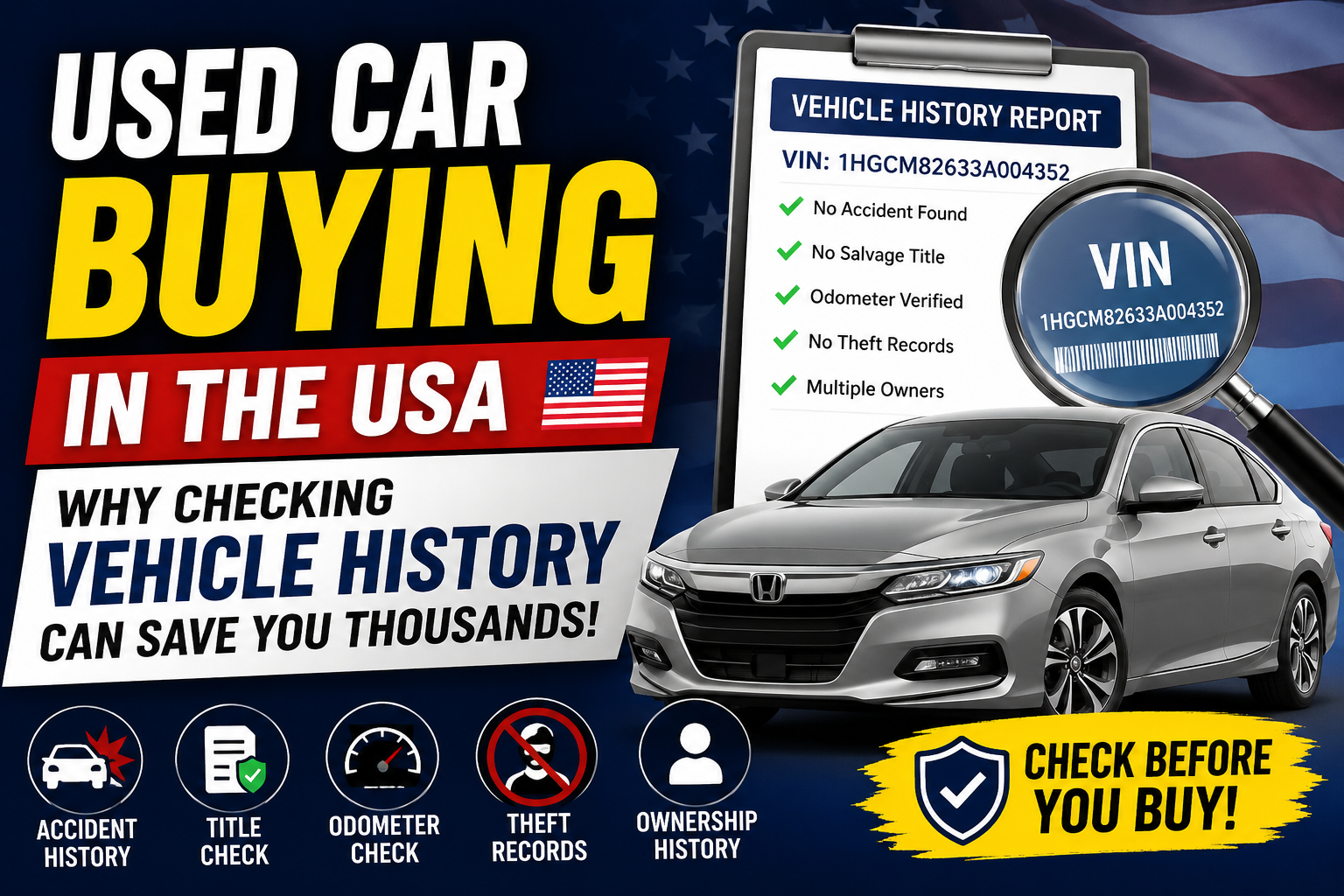
Used Car Buying Guide USA: Why Checking Vehicle History Can Save You Money
Buying a used car in the USA can help you save money, but it also comes with risks if you don’t know the vehicle’s complete history. A car may look attractive from the outside and perform well during a short test drive, but hidden problems such as accident records, flood damage, mileage manipulation, or title issues can create expensive problems later.
Before purchasing a used vehicle, many smart buyers first check its background to make an informed decision.
What Is a Vehicle Identification Number (VIN)?
A Vehicle Identification Number (VIN) is a unique 17-character code assigned to every vehicle. It works like a fingerprint and contains important details about the vehicle.
A VIN can provide information about:
- Vehicle manufacturer
- Model year
- Engine details
- Production location
- Vehicle specifications
You can usually find the VIN in these locations:
- Dashboard near the windshield
- Driver-side door frame
- Vehicle registration documents
- Insurance paperwork
Why Vehicle History Matters Before Buying a Used Car
Many used cars can have hidden issues that are difficult to detect simply by looking at them.
A vehicle history report can help uncover important details.
Accident History
Some vehicles may have experienced major accidents in the past. Even if repairs were completed, previous damage can affect future performance and resale value.
Salvage Title Information
Cars affected by floods, fires, or severe damage may receive salvage titles. Buyers should understand a vehicle’s status before making a purchase.
Odometer Rollback Issues
Mileage manipulation remains a common problem in the used car market. Incorrect mileage readings can make a vehicle appear newer than it actually is.
Theft Records
Checking records can help identify whether a vehicle has ever been reported stolen.
Previous Ownership Details
Knowing how many owners a vehicle had can provide insights into its maintenance and overall condition.
How Vehicle History Reports Save Buyers Money
Purchasing a used vehicle without proper research may lead to unexpected expenses later.
Potential hidden costs may include:
- Expensive repair bills
- Mechanical failures
- Structural damage
- Insurance issues
- Reduced resale value
Spending a little time checking vehicle information can potentially save thousands of dollars.
Important Red Flags When Buying a Used Car
Be careful if you notice these warning signs:
- Seller avoids sharing vehicle information
- Vehicle price seems unusually low
- Documents appear incomplete
- Mileage seems suspicious
- Vehicle condition doesn’t match its age
Tips for Buying a Used Car in the USA
Follow these simple tips before finalizing your purchase:
1. Inspect the vehicle carefully
Look for dents, rust, paint mismatches, and unusual wear.
2. Take a test drive
Drive on different roads and pay attention to engine performance, brakes, and steering.
3. Review maintenance records
Regular service history can indicate proper care.
4. Verify vehicle history
Checking records helps identify hidden issues.
5. Get a professional inspection
A mechanic can identify problems that may not be visible.
Final Thoughts
Buying a used car is a major financial decision. Taking extra time to review a vehicle’s background can help avoid future surprises and unnecessary expenses.
Smart buyers focus not only on appearance and price but also on a vehicle’s complete history. Doing proper research can increase confidence and help you make a safer buying decision.






Leave a Reply