
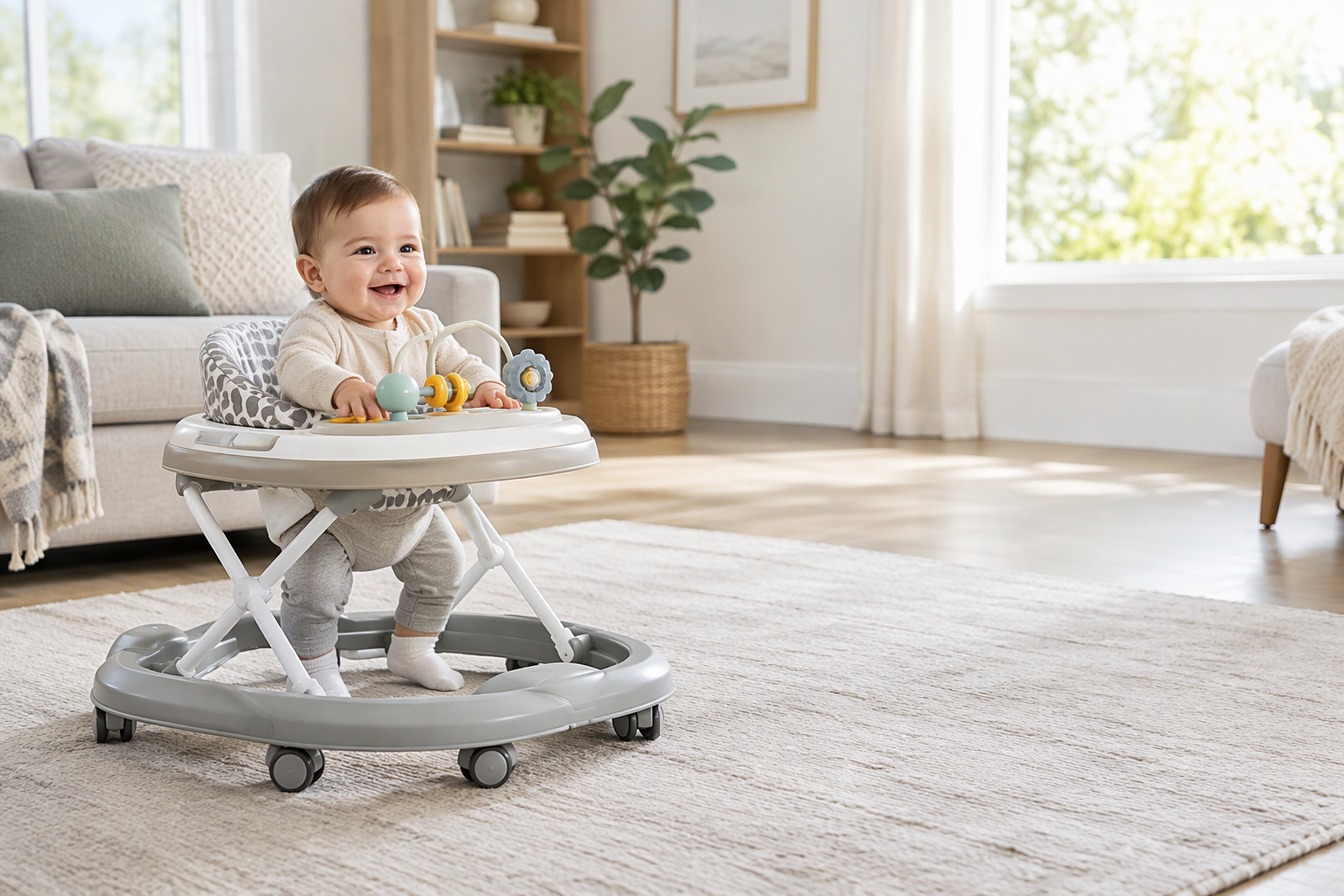
Learning how to choose a stroller is easier when you start with your real routine instead of a long list of trendy features. The best stroller for a family that walks daily is not always the best stroller for a parent who drives, travels, uses public transport, or has two children. A careful choice should balance child comfort, caregiver comfort, safety, storage, terrain, and long-term value.
1. Choose the stroller type first
Full-size strollers are versatile and often offer the most padding, recline, storage, and suspension. Lightweight strollers are easier to lift and carry. Travel strollers fold compactly. Jogging strollers are built for active movement and uneven paths, while double strollers serve families with two children.
Choose the category that matches your most common use. Do not buy a jogging stroller simply because it looks sturdy if you will mostly shop indoors. Do not buy an ultra-compact model if your baby needs a roomy recline for long walks.
2. Match the stroller to your child’s stage
Check the manufacturer’s minimum age, weight, height, and recline guidance. Newborns may need a near-flat position, carrycot, or approved infant car-seat system. Older babies may use a supported recline, while toddlers often need a more upright seat and a higher weight limit.
Never place a baby in a seat that is not designed for that stage. Use the harness every time and do not add pillows or loose cushions that are not approved for the model.
3. Inspect the seat and harness
The seat should be supportive, comfortable, and easy to clean. Look for useful recline positions, a padded backrest, an adjustable footrest, and enough width for growth. The harness should be a secure five-point system with adjustable straps.
Test the buckle and strap adjusters. They should be secure but not so complicated that you avoid using them. Check that the harness remains positioned correctly when the seat reclines.
4. Compare wheels and suspension
Small wheels are often lighter and easier to store, while larger wheels handle rough paths better. Suspension can improve comfort on uneven surfaces and reduce vibration through the handle.
Turn the stroller in a tight space and push it over the flooring you use most. Check for rattling, wobbling, wheel locks, and front-wheel alignment. If you walk on gravel or broken sidewalks, prioritize wheel durability over the smallest folded size.
5. Evaluate brakes and frame locks
A brake should engage clearly and keep the stroller from rolling. Test it on a gentle slope while holding the stroller. A frame lock should remain secure when the stroller is open and when it is folded for storage.
Keep fingers clear of hinges while folding. Read the manual and make sure the stroller is completely locked before placing your child inside.
6. Measure your home and vehicle
Measure doorways, lifts, storage areas, and the car trunk opening. A stroller may fit inside a large trunk but fail to pass through a narrow doorway or lift.
Record both open and folded dimensions. If you will carry the stroller upstairs, check the actual weight and whether you can hold it safely with one hand while managing your child.
7. Think about climate and fabric
A large canopy, ventilation panels, and breathable fabric can help in warm weather. A rain cover may be useful in wet climates, but it should be designed for the stroller and used according to instructions to avoid poor ventilation.
Choose fabric that wipes clean or can be removed for washing. Examine the seams and padding for areas where crumbs and moisture can collect.
8. Check storage without overloading
A basket is useful for diapers, snacks, and light shopping. Check whether it remains accessible when the seat is fully reclined. Do not hang heavy bags on the handle unless the manufacturer allows it because this can make the stroller tip backward.
Parent consoles, cup holders, and organizers are convenient, but use approved accessories and keep the handle balanced.
9. Consider travel and public transport
Frequent travelers may need a quick fold, a carrying strap, and compact dimensions. Public transport users may prioritize a lightweight frame and easy steering in crowded spaces.
Check whether the stroller can stand when folded and whether moving parts are protected from damage. Confirm current airline or transport rules before a trip because policies can vary.
10. Test it before buying
Push with one hand, turn around obstacles, apply the brake, fold the frame, lift it, and adjust the recline. Put a weighted bag in the seat to imitate real use. Check whether the handle height causes you to bend or raise your shoulders.
Stroller safety checklist
- Use the correct seat position for your child’s age and development.
- Fasten the harness on every journey.
- Engage the brake whenever you stop.
- Keep fingers away from hinges while folding.
- Do not overload the handle or basket.
- Use only approved accessories and adapters.
- Keep the stroller away from stairs and moving vehicles.
- Inspect wheels, brakes, locks, and fabric regularly.
Final buying advice
When learning how to choose a stroller, begin with your daily route, your child’s stage, and the spaces where the stroller must fit. Then compare wheels, seat comfort, harness, brakes, folding, storage, and cleaning. The best stroller is the one that remains safe and manageable after weeks of ordinary use.
Parenting note: Follow the manufacturer’s instructions and supervise your child whenever the stroller is in use.

Leave a Reply